Case Study
The Organisation
Taking a Proactive Approach to Men’s Mental Health
The client is a local government authority responsible for delivering public services, maintaining infrastructure and managing public assets.
With employees working across diverse roles and environments, the organisation identified men’s mental health and wellbeing as an area for greater support and chose to take practical action.
The Opportunity
Going Beyond Mental Health Information
The organisation wanted to provide men with more targeted support around mental health and wellbeing.
The objective went beyond providing information. It was to create an opportunity for male employees to step back from everyday pressures and responsibilities, develop greater self-awareness, better understand emotions and coping, become more comfortable accessing support and feel better equipped to respond when concerned about someone else.
What We Did
How the Initiative Developed
PILOT → PROGRESSIVE PROGRAM → TWO GROUPS → EVALUATION → NEW COHORT
The Program
Four Sessions. One Progressive Approach.
How It Was Delivered
More Than a Presentation
Participation was voluntary, and participants were not expected to disclose personal experiences they did not wish to discuss.
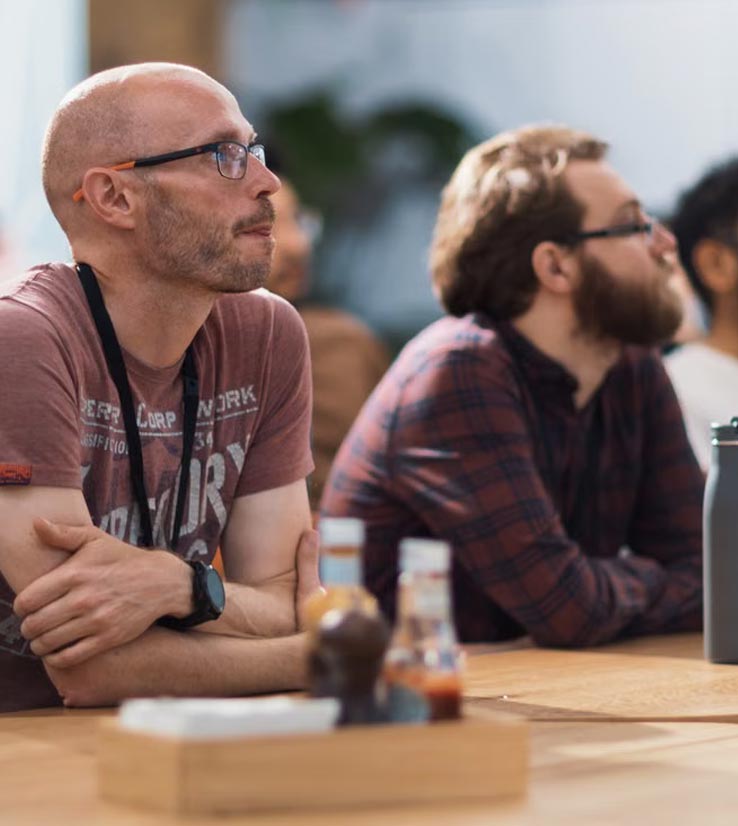
Rather than simply presenting information, the sessions encouraged conversation, reflection, different perspectives and practical consideration of how the material applied to everyday life.
For an organisation with existing workplace supports, the program provided another way to bring mental health conversations into the workplace and encourage engagement with support already available.
What Participants Valued
Conversation. Reflection. Practical Application.
Anonymous feedback highlighted recurring themes including:
- Open discussion and different perspectives
- Self-reflection and understanding emotions
- Active listening and recognising assumptions
- Coping, resilience and support networks
- Values and self-care
Participants also identified practical intentions including listening more carefully, asking questions, checking in with colleagues and approaching difficult situations more calmly and deliberately.
The Results
What Participants Told Us
100% Would Recommend the Program
All responses to this question indicated they would recommend the program to others.
100% Reported a Change in How They Thought About Mental Health and Wellbeing
Every respondent reported that the program helped them think differently about mental health and wellbeing.
100% Felt More Confident Checking In With Someone They Were Concerned About
Every respondent agreed or strongly agreed that they felt more confident checking in with someone they were concerned about.
84% Felt More Confident Seeking Support
84% agreed or strongly agreed that they felt more confident seeking support themselves.
94% Reported Greater Awareness Before Reacting
94% agreed or strongly agreed that they better understood how to recognise assumptions before reacting.
100% Rated the Final Resilience Session Highly
Every respondent rated the final session Very Useful or Extremely Useful.
100% Rated the Overall Program Positively
Every overall program rating was Good, Very Good or Excellent, with the large majority rated Very Good or Excellent.
From Pilot to Continuing Engagement
The Organisation Chose to Continue the Initiative
What began as an initial pilot developed into a four-session program delivered across two groups and evaluated through anonymous participant feedback.
The organisation identified the opportunity. Your Life Therapy developed and delivered the response. Employees chose to participate. Participant feedback demonstrated strong perceived usefulness, learning and increased confidence in both seeking support and supporting others.
Following the program, Your Life Therapy was invited to deliver it to a new cohort of employees.
Having support available matters. Helping people engage with it matters too.
I bring together my work as a counsellor and psychotherapist with more than 20 years of management experience working with people, teams and organisations.
Having held branch, regional and general management and project management roles, with responsibility for people, operations, commercial and financial performance, business objectives and KPIs, I understand the practical realities of balancing people, performance and organisational responsibilities.
Today, these two areas of experience inform my approach to workplace mental health, bringing together an understanding of mental health and people with practical experience of the realities faced by managers and organisations.