
Men’s Mental Health
Specialist counselling and psychotherapy for men, grounded in the realities of men’s lives.
Men’s mental health is more than a diagnosis.
Men can experience the same mental health difficulties as anyone else, but the way those difficulties are experienced, understood and expressed can be shaped by relationships, roles, expectations, identity, culture and the ways men have learned to cope.
Some men arrive knowing exactly what they want help with.
Others know that something is not right but struggle to put it into words.
Irritability, withdrawing, working more, drinking more, losing motivation, relationship conflict, feeling numb, becoming increasingly stressed or simply feeling disconnected from yourself can all be reasons to stop and take a closer look.
You do not need to be in crisis, and you do not need to have the right language for what is happening.
Why Men’s Mental Health Deserves Attention
Men’s mental health is about much more than statistics, but the numbers reinforce why it deserves attention.
In 2024, 2,529 Australian males died by suicide.
The median age of males who died by suicide in 2024 was 46.5 years.
Suicide is the leading cause of death for Australian men aged 15–44.
In 2020–2022, 32.4% of Australian males aged 16–24 experienced a mental disorder in the previous 12 months.
Behind every statistic is an individual life, and suicide is complex. There is rarely a single cause or explanation.
The figures do, however, reinforce the importance of recognising when something may not be right, making conversations about mental health easier and helping men feel more able to access appropriate support before crisis becomes the starting point.
Counselling and Psychotherapy for Men
Men’s mental health is a specialist area of my counselling and psychotherapy practice. I provide individual counselling and psychotherapy for men experiencing a broad range of mental health, emotional, relational and life concerns.
This can include anxiety and stress, depression and low mood, relationship difficulties and separation, anger and emotional regulation, loneliness and isolation, trauma and difficult experiences, grief and loss, addiction and problematic behaviours, work and financial pressures, burnout, identity, fatherhood, confidence, emotional difficulties, meaning and purpose.


Focused Support
Some men come to therapy because something specific has happened. Others have been carrying things for a long time, or recognise that the way they have been coping is no longer working.
Counselling can provide focused support around what is happening now, while psychotherapy can allow us to explore more deeply recurring patterns, relationships, emotional experiences and earlier experiences that may continue to influence the present.
In practice, the distinction is not always rigid. The work can move between both according to your needs, circumstances and what becomes important during therapy.
You do not need to decide whether you need counselling or psychotherapy before getting in touch.
The Realities Men Can Face
There is no single way to be a man in 2026.
Ideas about masculinity continue to change, and men can find themselves navigating different and sometimes competing expectations around strength, vulnerability, relationships, work, fatherhood, providing, independence and emotional openness.
For some men, this can create uncertainty about what is expected of them and what being a good man, partner, father, friend or colleague actually means.
Therapy does not impose a definition of masculinity.
It provides space to examine the expectations you have inherited, the expectations you place on yourself and the kind of man you want to be.


The Roles Men Perform
Men can perform many roles at the same time.
Partner. Father. Son. Friend. Colleague. Manager. Provider. Carer. Community member.
Each can bring meaning and connection, but also responsibility and expectations. There can be significant focus on what needs to be done, who needs something from us, the responsibilities we carry and the expectations we place on ourselves.
In continually doing, providing and giving, it can become easy to lose sight of how we are actually going.
Sometimes the person who is regularly supporting everyone else has given very little consideration to who or what is supporting them.
Therapy can provide an opportunity to step back from those roles for a while and consider the person performing them.
Relationships, Separation and Relational Breakdown
Relationship difficulties and separation can have a significant impact on men’s mental health.
The loss may involve far more than the relationship itself. It can affect family life, connection with children, friendships, living arrangements, finances, identity, routine, social connection and the future you expected to have.
Some men have strong support networks around them. Others discover during a relationship breakdown that their partner had become their main source of emotional connection and that their wider support network has narrowed over time.
There may also be grief, anger, regret, uncertainty, conflict or questions about what happened and what comes next.

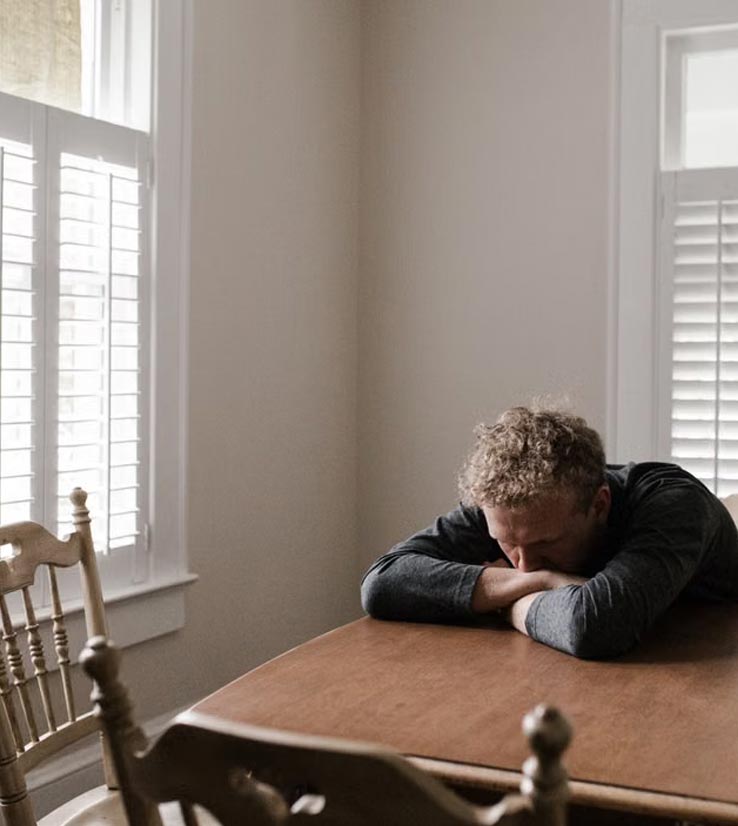
The significance of relationships is also reflected in Australian suicide data. In 2024, problems involving spousal relationships were recorded as a psychosocial risk factor in approximately one-quarter of male suicide deaths, and in almost one-third of male suicide deaths among those aged 25 to 44.
This does not mean that relationship breakdown causes suicide. Suicide is complex and generally involves multiple interacting factors. It does, however, highlight the importance that relationships, separation and interpersonal difficulties can have in men’s lives.
Counselling and psychotherapy can provide somewhere to work through both the practical and emotional consequences of relationship difficulties and separation, while also exploring relationship patterns, communication, attachment, boundaries and what you may want from relationships going forward.
Loneliness, Isolation and Connection
Being around people does not necessarily mean feeling connected.
A man can have colleagues, family, acquaintances and people around him while having few relationships in which he feels able to talk openly about how he is actually going.
Changes in relationships, family roles, work, retirement, relocation or friendship networks can increase that sense of isolation.
Sometimes isolation happens gradually. Contact reduces, life becomes busy and relationships become increasingly functional rather than meaningful.
Therapy can help you understand the difference between being alone and feeling alone, consider the relationships and support networks available to you and explore what meaningful connection looks like in your life.


Stigma and Reaching Out for Support
For some men, asking for help can feel uncomfortable.
Messages about coping alone, being strong, not burdening other people or simply getting on with things can make it harder to acknowledge when support would be useful.
There can also be concern about how other people might respond, whether the problem is serious enough or whether talking about it will actually help.
Seeking support does not require you to abandon independence or hand responsibility for your life to somebody else.
It can be a deliberate decision to understand what is happening and use appropriate support rather than continuing to carry everything alone.
Sometimes the first step is simply having a conversation in which you do not need to pretend everything is fine.
Emotional Literacy
Many men have become very capable at solving practical problems while having had fewer opportunities to develop language for emotional experiences.
You may know that you are angry, frustrated, stressed or simply not yourself without necessarily knowing what sits underneath it.
Developing emotional literacy is not about analysing every feeling or becoming endlessly introspective.
It is about becoming better able to recognise what you are experiencing, understand what may be contributing to it and decide how you want to respond.
Greater awareness of emotions can also help with communication, relationships, recognising when something is building and understanding when support may be useful.


Coping
Everyone develops ways of coping.
Some strategies genuinely help us manage difficult experiences and maintain our wellbeing. Others may provide relief in the short term while creating additional difficulties over time.
Work, withdrawal, alcohol or other substances, anger, avoidance, overthinking, excessive exercise, gaming or constantly staying busy can sometimes become ways of not having to stop and notice what is happening.
Therapy is not about judging the way you have learned to cope.
It is about understanding what those strategies are doing for you, what they may be costing you and whether there are other ways of responding that might serve you better.
Support Networks and Accessing Support
Support can come from different places.
Partners, family, friends, colleagues, community, health professionals and mental health professionals can all form part of a person’s support network.
Part of looking after our mental health is recognising what support we already have, where the gaps may be and when additional support might be useful.
That can also mean becoming more comfortable accessing professional support before things reach crisis point.
Having support available matters.
Being willing and able to engage with it matters too.


Taking a Step Back From the Doing of Life
Therapy can create space to step back from the constant doing of life.
- How am I actually going?
- What am I carrying?
- What is taking from me and what gives something back?
- How am I coping?
- Who supports me while I am supporting others?
- What matters to me beyond the roles and responsibilities I perform?
- Is the direction I am travelling still aligned with the person I want to be?
The purpose is not to tell you how a man should live.
It is to develop greater awareness of yourself, your relationships, your choices and the direction you are travelling.
Greater awareness can create greater choice.
What Men Commonly Bring to Therapy
Men seek counselling and psychotherapy for many different reasons, including:
- Anxiety and stress
- Depression and low mood
- Relationship difficulties and separation
- Anger and emotional regulation
- Loneliness and isolation
- Work and career pressures
- Financial pressure
- Fatherhood and family responsibilities
- Trauma and difficult experiences
- Grief and loss
- Alcohol, substances and other problematic behaviours
You do not need to decide which category you fit into before getting in touch. We can start with what is happening in your life.
How I Work With Men
My approach is empathic and person-centred, while also practical, collaborative and direct.
You do not need to arrive knowing exactly what to say.
We can begin with what is happening, understand the patterns and experiences that may sit underneath it and consider what might need to change.
I bring counselling and psychotherapy experience together with substantial real-world management and workplace experience.
That means the work can include emotional and relational depth while remaining grounded in the realities of work, responsibility, relationships and everyday life.
The aim is not to tell you what to do or who you should become.
It is to help you understand yourself more clearly and make choices that are right for you.
Sessions are available online or in person.

You Don’t Have to Work It Out Alone
You do not need to wait until things become overwhelming before taking your mental health seriously.
If something is not right, your relationships are struggling, the way you have been coping is no longer working, or you simply want to understand yourself better, counselling and psychotherapy can provide somewhere to start.
If you would like to see whether working together may be right for you, I offer a complimentary 15-minute initial phone call.
If You Need Immediate Support
If you are in immediate danger or concerned that you may act on thoughts of suicide or self-harm, call 000 or attend your nearest emergency department.
For 24-hour crisis support in Australia, contact
Lifeline on 13 11 14.
Sources: Australian Bureau of Statistics, Causes of Death / Intentional self-harm (suicide) deaths, 2024; Australian Institute of Health and Welfare, Intentional self-harm and suicide; and Australian Bureau of Statistics, National Study of Mental Health and Wellbeing 2020–2022.