
Why Group Conversations Can Work for Men
How group conversations can provide men with opportunities for connection, shared experience, different perspectives and greater mental health awareness.
Author: Jon Farham
Category: Men's Mental Health, Relationships & Connection
Practice: Your Life Therapy
Published: September 19, 2026
Mental health conversations are often imagined as something that happens privately between two people.
That can be incredibly valuable. But it is not the only way people can develop greater awareness of themselves or begin thinking differently about mental health.
For some men, something interesting can happen when the conversation takes place with other men.
Someone says something you recognise.
Another person describes an experience differently.
Someone asks a question you had not considered.
You realise that something you thought was uniquely yours is something other people have experienced as well.
Group conversations can create opportunities not only to speak, but also to listen, reflect and learn from the experiences of others.
Men do not all experience mental health in the same way
Talking about “men’s mental health” can sometimes make it sound as though men are one group who think, feel and behave in the same way.
We do not.
Men bring different personalities, relationships, cultures, occupations, ages, family experiences, beliefs and life histories into a room.
That difference can be one of the strengths of a group.
When a group is working well, the objective is not necessarily to get everyone to agree.
It can be more useful to hear how another person sees something.
One man may respond to stress by withdrawing. Another may become busy. Someone else may become angry or impatient. Another might talk to his partner or a friend. Someone may exercise. Someone may drink. Someone may simply keep going until they cannot.
Hearing those differences can help us recognise that our own way of responding is one possible response, rather than the only one.
Sometimes listening is as important as talking
Participation in a group does not have to mean telling strangers the most personal parts of your life.
That expectation can itself become a barrier.
A meaningful group conversation can begin with listening.
You may hear another person describe something that feels familiar.
You may recognise yourself in someone else’s experience.
Or you may hear a perspective completely different from your own.
Sometimes another person finds the words for something we have experienced but have never really articulated.
That can create a moment of recognition.
“I do that.”
“I know that feeling.”
“I’ve never thought about it that way.”
Those moments can be important.
Shared experience can reduce isolation
One of the difficulties people can experience when struggling is the belief that they are somehow the only person who feels the way they do.
We compare what is happening inside ourselves with what we can see on the outside of everyone else.
The other person appears confident.
He seems successful.
He has a family, a career, friends and responsibilities.
He looks like he has everything together.
But outward functioning tells us very little about someone’s internal experience.
When men hear other men speak openly about stress, relationships, emotions, uncertainty, pressure or difficulties asking for support, it can challenge the assumption that everyone else has life worked out.
It can also reduce some of the isolation that can accompany mental health difficulties.
Different perspectives create opportunities for reflection
There is another important part of group work that is sometimes overlooked.
Other people see things differently.
We all develop assumptions, beliefs and ways of interpreting situations based on our experiences.
Those interpretations can feel completely true because they are the only perspective available to us at that moment.
Then someone else looks at the same situation and sees something different.
That does not automatically mean they are right and we are wrong.
It means there may be another way of understanding what happened.
That can create space between an event and our immediate interpretation of it.
Greater awareness of our assumptions, reactions and patterns can give us more choice in how we respond.
Connection matters
Men can be surrounded by people and still feel disconnected.
Workplaces, sporting clubs, social groups and friendships can provide plenty of interaction without necessarily providing much space for meaningful conversation.
Connection does not require every conversation to become deeply personal.
Sometimes it begins with people being willing to move beyond the surface.
To listen properly.
To ask another question.
To be curious rather than immediately offering advice.
To recognise that another person’s experience may be different from our own.
A well-facilitated group can create a space where those conversations become possible.
The environment matters
Simply putting a group of men in a room and asking them to talk about mental health does not guarantee a useful conversation.
How the group is facilitated matters.
People need to understand why they are there.
The conversation needs to feel relevant.
Participation should be respected rather than forced.
Language should be understandable rather than unnecessarily clinical.
There needs to be room for humour, difference, uncertainty and disagreement while maintaining appropriate boundaries and respect.
For me, group work is not about lecturing men about how they should think, feel or behave.
It is about creating opportunities for discussion, reflection and greater awareness.
The facilitator may bring knowledge and structure, but the men in the room also bring knowledge.
They bring their own lives.
Groups are not a replacement for individual support
Group conversations can be valuable, but they are not the right setting for every person or every difficulty.
Some experiences require privacy and individual attention.
Some people will simply prefer speaking one-to-one.
Others may participate in a group and recognise that there are things they would like to explore further individually.
That is why group mental health programs and individual therapy can complement each other.
The purpose is not to force everyone into the same type of support.
It is to create different opportunities for people to engage.
Sometimes another person helps us see ourselves
Self-awareness sounds individual, but we do not develop it entirely on our own.
Relationships give us information about ourselves.
Conversations give us information about ourselves.
Other people’s perspectives can help us recognise our own assumptions, patterns and behaviours.
Sometimes we learn something because somebody teaches it to us.
Sometimes we learn something because another person tells their story and something in it causes us to reflect on our own.
That is one of the possibilities created by a meaningful group conversation.
Research and Further Reading
Cramer et al.
Do Depressed and Anxious Men Do Groups? What Works and What Are the Barriers to Help Seeking?
https://pubmed.ncbi.nlm.nih.gov/23800394/
Seaton et al.
Men’s Mental Health Promotion Interventions: A Scoping Review
https://pmc.ncbi.nlm.nih.gov/articles/PMC5675255/
Seidler et al.
Engaging Men in Psychological Treatment: A Scoping Review
https://pmc.ncbi.nlm.nih.gov/articles/PMC6199457/
Men’s Mental Health Programs
I design and deliver bespoke men’s mental health and wellbeing programs for organisations, with an emphasis on relevant conversation, greater self-awareness, practical engagement and appropriate pathways to support.
Programs are tailored to the organisation and the people participating rather than delivered as a generic, off-the-shelf package.
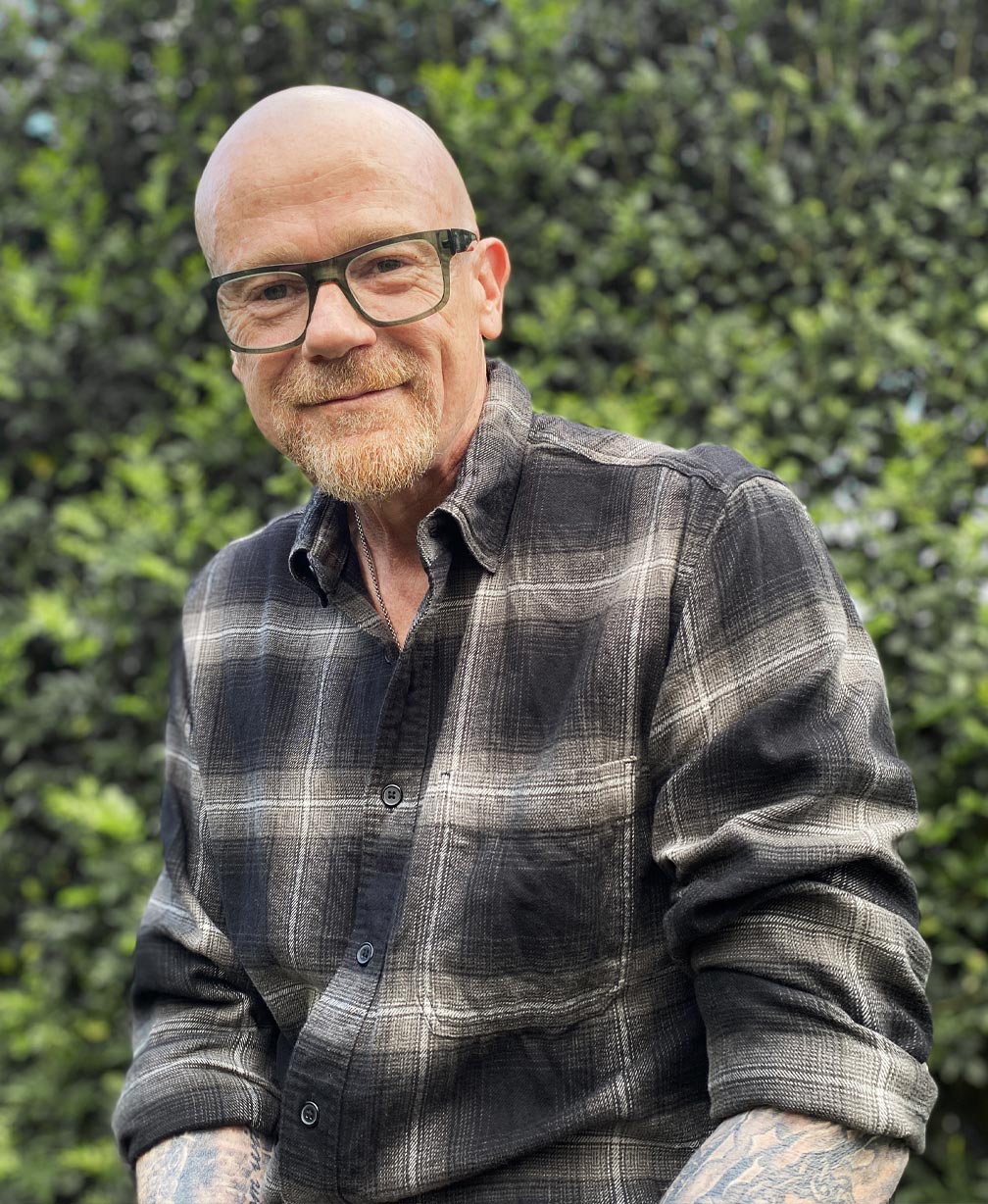
Jon is a counsellor and psychotherapist with extensive therapeutic experience across private practice, mental health and human services settings. His approach is empathic and person-centred, while also practical, direct and grounded in everyday life.
Before entering the mental health field, he spent more than 20 years in business and management roles, leading people, teams and operations and carrying responsibility for commercial and financial outcomes. This combination of therapeutic and management experience informs his work with individuals and organisations, with particular professional interests in men’s mental health and workplace mental health. Read More
Categories
Related Posts


Resources
Australian Institute of Family Studies: Ten to Men
Australian Men’s Health Forum
Healthy Male
Beyond Blue
SafeWork NSW
Australian Men’s Mental Health Statistics
ABS — Intentional self-harm (suicide) deaths, 2024
AIHW — Intentional self-harm and suicide
ABS — National Study of Mental Health and Wellbeing, 2020–2022